
The Arts and Science of Themed Aquarium Exhibits
Aquariums are magical places where visitors can experience the wonders of underwater life, from graceful sharks gliding through blue waters to vibrant coral reefs teeming with exotic fish. But behind these breathtaking scenes is a carefully orchestrated blend of artistry, science, and engineering that shape the exhibits and walkways.
The use of hyper-realistic rockwork, coral and vegetation and creative theming displays transform aquariums from mere rows of tanks into immersive environments that captivate and educate visitors, all while providing safe, species-appropriate habitats for marine life.
One prime example is the Marassi Aquarium and Underwater Zoo in Bahrain, which promises visitors an awe-inspiring journey through various aquatic realms. With zones like the Ocean Trench, Rainforest Lagoon, Reef Zone, and Sea Jellies, Marassi transports guests to distinct underwater worlds, each one designed to inspire, educate, and entertain.
This article explores what goes into creating the props and features that shape these scenes, from material requirements to intricate collaborations between design teams and marine biologists.
Creating an Immersive Storytelling Experience
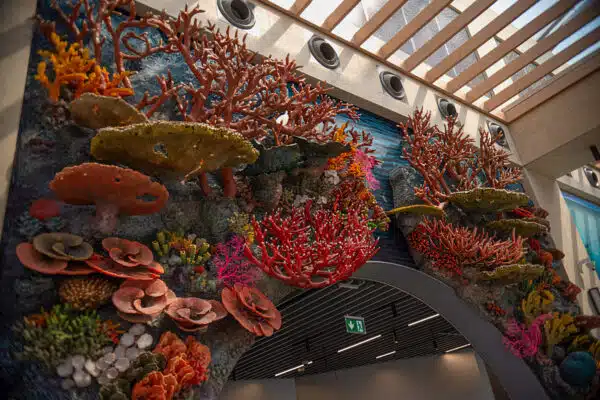
For aquariums like Marassi, the journey begins the moment visitors walk through the door. Creative theming transports them to another world, a place where the usual boundaries of reality blur and they feel surrounded by the beauty and mystery of marine environments or surrounding above water habitats.
The use of dry-side and in-tank theming elements enhances this suspension of disbelief. Large, walk-through shipwrecks, lush plant-filled paths and coastal rock structures guide visitors along, seamlessly connecting and integrating with the view within aquatic exhibits on the other side of the windows.
The largest aquarium in Bahrain, Marassi was built by Australian firm Advanced Aquarium Technologies (AAT) – a world leader in the design and construction of international public aquariums – leveraging original designs by James Hampton Design Partners.
AAT Chief Executive, John Langmead advises “in a mid- sized aquarium like Marassi, rockwork, coral and creative theming is vital to create beautiful, believable and inspiring scenes and surroundings, so that visitors feel like they have been transported to another realm.”
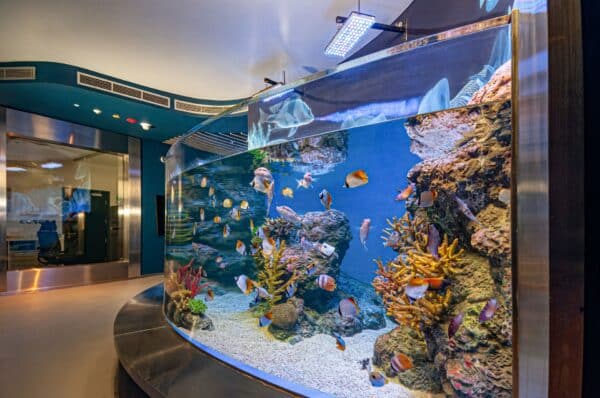
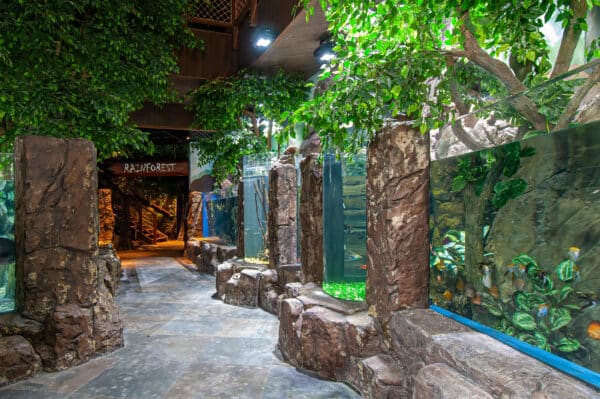
Marassi’s Reef Zone, for example, features delicate coral formations, while the Rainforest Lagoon, brings to life a lush tropical forest sanctuary packed with freshwater aquarium exhibits. This thematic approach allows aquariums to create emotional and educational experiences that leave a lasting impact.
The Scope of Exhibit Theming
The journey to creating these themed environments is no small task. From hyper-realistic artificial rocks to sea grass, kelp, and coral structures, every element is selected, designed and placed with purpose. Careful arrangements of coral and rocks provide not only a visually stunning display but also essential hiding places for some of the animals.
In addition to in-tank features, aquariums often extend theming into public areas, making the experience cohesive from the moment visitors enter.
At Marassi, paths lined with tropical plants, realistic rock formations, and thematic décor help maintain the illusion of coastal, tropical or underwater journeys.
As Langmead notes “creative elements like shipwrecks, aeroplane wrecks, anchors and pirate’s treasure chests establish exhibit scenes that are spectacular and engaging while giving visitors a sense of adventure and discovery.”
Materials Matter – Durability and Safety
One of the less visible but crucial aspects of aquarium theming is the selection of materials. These elements aren’t just for show; they must withstand the harsh conditions of saltwater environments while remaining safe for the animals.
Materials for artificial rockwork and coral structures are chosen for their durability and non-toxicity. For example, metal is avoided because it can rust, releasing harmful ions into the water. Instead, materials selected must be corrosion-resistant, long-lasting, and safe for marine life.
Artificial coral and rockwork must not break down over time, as that could release toxins or microplastics into the water. This attention to material choice ensures that the displays maintain their appearance and functionality, providing a stable, safe and long-lasting environment for the marine inhabitants.
Species Compatibility and Natural Behaviours
In addition to durability, species compatibility is a key consideration in exhibit design. Different species have unique requirements, and aquariums must balance aesthetic appeal with functional habitats that support natural behaviours.
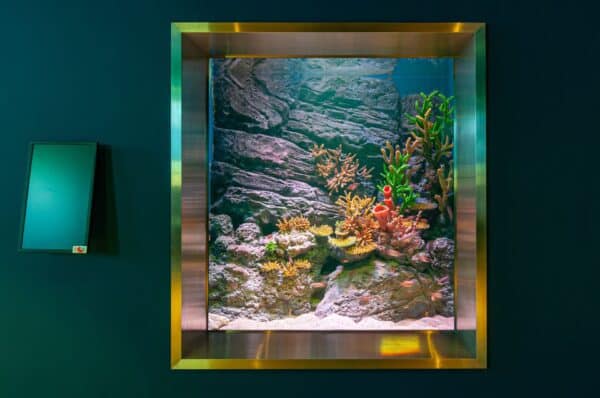
For example, turtles are known to bite and chew on soft objects, so artificial soft corals wouldn’t be suitable in turtle tanks. Likewise, eels appreciate hiding spaces, which are incorporated into rock formations in displays to help them feel secure.
Laetitia Finch, AAT’s Director of Aquarium Operations, explains “the goal is to mimic natural habitats as closely as possible enabling the animals to express their natural behaviours as they would in the wild.” This not only promotes the animals’ well-being but also enhances the educational experience for visitors, who see animals interacting naturally with their surroundings.
Collaboration Across Disciplines
Creating these immersive, species-appropriate environments is a multidisciplinary effort. AAT, for example, brings together the expertise of aquarium designers and aquarists, species and animal husbandry expertise, 2D artists and sculptors, model makers, manufacturing specialists and on-site construction project managers to bring their visions to life. Langmead goes on to say “this multidisciplinary collaboration ensures that every element is beautiful, functional, durable, species appropriate and efficient to produce and install.
“At Marassi, the collaboration between these teams allows for the creation of exhibits that are not only visually impressive but also compatible with the needs of the animals. This blend of art and science is essential in crafting habitats that visitors will remember and that animals will thrive in.”
The Unsung Hero of Visitor Experience
Artificial rockwork, coral and themed environments are the unsung heroes of a great aquarium experience. Imagine visiting an aquarium where the tanks were stark and bare; this would be bad for animal welfare and the experience would lack the emotional and educational impact that creative theming brings. Aquariums like Marassi demonstrate the incredible power of well-designed environments to elevate the visitor experience, making it memorable, immersive, and inspiring.
The work that goes into creating these environments is substantial, but it’s what separates a basic exhibit from a world-class attraction. By blending artistry with science, aquariums create spaces where animals can thrive and visitors can lose themselves in the beauty of the underwater world. As visitors journey through spaces like Marassi’s Ocean Trench, Rainforest Lagoon, and Reef Zone, they gain a deeper appreciation for marine life and the importance of preserving our natural ecosystems.
In the end, these creative environments are more than just decorations; they are integral to the mission of modern aquariums. They captivate and inspire visitors, foster a connection to nature, and serve as a reminder of the fragile beauty of our oceans. Through thoughtful design and collaboration, aquariums bring the wonders of the underwater world to life, leaving a lasting impact on all who enter.
Read more about the Marassi Aquarium and Underwater Zoo project here: Marassi Aquarium and Underwater Zoo: An Underwater World Within a Shopping Mall
Tim Eldridge is Head of Corporate Affairs and Marketing for Advanced Aquarium Technologies.
This article was originally published as “Transforming Aquariums” in Australasian Leisure Management, Issue 165 (November/December 2024)


The Arts and Science of Themed Aquarium Exhibits
Aquariums are magical places where visitors can experience the wonders of underwater life, from graceful sharks gliding through blue waters to vibrant coral reefs teeming with exotic fish. But behind these breathtaking scenes is a carefully orchestrated blend of artistry, science, and engineering that shape the exhibits and walkways.
The use of hyper-realistic rockwork, coral and vegetation and creative theming displays transform aquariums from mere rows of tanks into immersive environments that captivate and educate visitors, all while providing safe, species-appropriate habitats for marine life.
One prime example is the Marassi Aquarium and Underwater Zoo in Bahrain, which promises visitors an awe-inspiring journey through various aquatic realms. With zones like the Ocean Trench, Rainforest Lagoon, Reef Zone, and Sea Jellies, Marassi transports guests to distinct underwater worlds, each one designed to inspire, educate, and entertain.
This article explores what goes into creating the props and features that shape these scenes, from material requirements to intricate collaborations between design teams and marine biologists.
Creating an Immersive Storytelling Experience
For aquariums like Marassi, the journey begins the moment visitors walk through the door. Creative theming transports them to another world, a place where the usual boundaries of reality blur and they feel surrounded by the beauty and mystery of marine environments or surrounding above water habitats.
The use of dry-side and in-tank theming elements enhances this suspension of disbelief. Large, walk-through shipwrecks, lush plant-filled paths and coastal rock structures guide visitors along, seamlessly connecting and integrating with the view within aquatic exhibits on the other side of the windows.
The largest aquarium in Bahrain, Marassi was built by Australian firm Advanced Aquarium Technologies (AAT) – a world leader in the design and construction of international public aquariums – leveraging original designs by James Hampton Design Partners.
AAT Chief Executive, John Langmead advises “in a mid- sized aquarium like Marassi, rockwork, coral and creative theming is vital to create beautiful, believable and inspiring scenes and surroundings, so that visitors feel like they have been transported to another realm.”
Marassi’s Reef Zone, for example, features delicate coral formations, while the Rainforest Lagoon, brings to life a lush tropical forest sanctuary packed with freshwater aquarium exhibits. This thematic approach allows aquariums to create emotional and educational experiences that leave a lasting impact.
The Scope of Exhibit Theming
The journey to creating these themed environments is no small task. From hyper-realistic artificial rocks to sea grass, kelp, and coral structures, every element is selected, designed and placed with purpose. Careful arrangements of coral and rocks provide not only a visually stunning display but also essential hiding places for some of the animals.
In addition to in-tank features, aquariums often extend theming into public areas, making the experience cohesive from the moment visitors enter.
At Marassi, paths lined with tropical plants, realistic rock formations, and thematic décor help maintain the illusion of coastal, tropical or underwater journeys.
As Langmead notes “creative elements like shipwrecks, aeroplane wrecks, anchors and pirate’s treasure chests establish exhibit scenes that are spectacular and engaging while giving visitors a sense of adventure and discovery.”
Materials Matter – Durability and Safety
One of the less visible but crucial aspects of aquarium theming is the selection of materials. These elements aren’t just for show; they must withstand the harsh conditions of saltwater environments while remaining safe for the animals.
Materials for artificial rockwork and coral structures are chosen for their durability and non-toxicity. For example, metal is avoided because it can rust, releasing harmful ions into the water. Instead, materials selected must be corrosion-resistant, long-lasting, and safe for marine life.
Artificial coral and rockwork must not break down over time, as that could release toxins or microplastics into the water. This attention to material choice ensures that the displays maintain their appearance and functionality, providing a stable, safe and long-lasting environment for the marine inhabitants.
Species Compatibility and Natural Behaviours
In addition to durability, species compatibility is a key consideration in exhibit design. Different species have unique requirements, and aquariums must balance aesthetic appeal with functional habitats that support natural behaviours.
For example, turtles are known to bite and chew on soft objects, so artificial soft corals wouldn’t be suitable in turtle tanks. Likewise, eels appreciate hiding spaces, which are incorporated into rock formations in displays to help them feel secure.
Laetitia Finch, AAT’s Director of Aquarium Operations, explains “the goal is to mimic natural habitats as closely as possible enabling the animals to express their natural behaviours as they would in the wild.” This not only promotes the animals’ well-being but also enhances the educational experience for visitors, who see animals interacting naturally with their surroundings.
Collaboration Across Disciplines
Creating these immersive, species-appropriate environments is a multidisciplinary effort. AAT, for example, brings together the expertise of aquarium designers and aquarists, species and animal husbandry expertise, 2D artists and sculptors, model makers, manufacturing specialists and on-site construction project managers to bring their visions to life. Langmead goes on to say “this multidisciplinary collaboration ensures that every element is beautiful, functional, durable, species appropriate and efficient to produce and install.
“At Marassi, the collaboration between these teams allows for the creation of exhibits that are not only visually impressive but also compatible with the needs of the animals. This blend of art and science is essential in crafting habitats that visitors will remember and that animals will thrive in.”
The Unsung Hero of Visitor Experience
Artificial rockwork, coral and themed environments are the unsung heroes of a great aquarium experience. Imagine visiting an aquarium where the tanks were stark and bare; this would be bad for animal welfare and the experience would lack the emotional and educational impact that creative theming brings. Aquariums like Marassi demonstrate the incredible power of well-designed environments to elevate the visitor experience, making it memorable, immersive, and inspiring.
The work that goes into creating these environments is substantial, but it’s what separates a basic exhibit from a world-class attraction. By blending artistry with science, aquariums create spaces where animals can thrive and visitors can lose themselves in the beauty of the underwater world. As visitors journey through spaces like Marassi’s Ocean Trench, Rainforest Lagoon, and Reef Zone, they gain a deeper appreciation for marine life and the importance of preserving our natural ecosystems.
In the end, these creative environments are more than just decorations; they are integral to the mission of modern aquariums. They captivate and inspire visitors, foster a connection to nature, and serve as a reminder of the fragile beauty of our oceans. Through thoughtful design and collaboration, aquariums bring the wonders of the underwater world to life, leaving a lasting impact on all who enter.
Read more about the Marassi Aquarium and Underwater Zoo project here: Marassi Aquarium and Underwater Zoo: An Underwater World Within a Shopping Mall
Tim Eldridge is Head of Corporate Affairs and Marketing for Advanced Aquarium Technologies.
This article was originally published as “Transforming Aquariums” in Australasian Leisure Management, Issue 165 (November/December 2024)